As technology continues to advance at an exponential rate, the demand for faster and more reliable internet speeds has never been greater. With the rollout of 5G networks around the world, we are entering a new era of connectivity that promises to revolutionize the way we live, work, and play. In this article, we will explore the evolution of internet speeds in the 5G era and the impact it will have on our daily lives.
From 1G to 5G: A Brief History
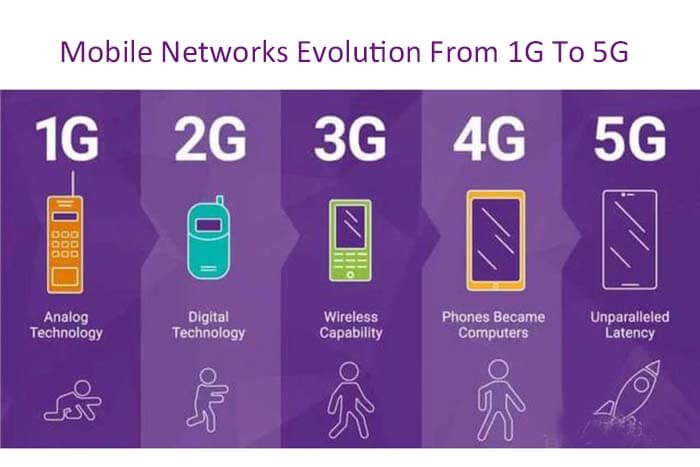
The journey to 5G has been a long and arduous one, spanning several decades of innovation and technological breakthroughs. It all began with the introduction of 1G networks in the 1980s, which offered basic voice calling capabilities but little in the way of data transfer speeds. Over the years, we saw the development of 2G, 3G, and 4G networks, each offering faster speeds and more advanced features than its predecessor.
Now, with the advent of 5G, we are on the cusp of a new era of connectivity that promises to revolutionize the way we use the internet. With speeds up to 100 times faster than 4G and ultra-low latency, 5G will enable a host of new applications and services that were previously unimaginable.
The Benefits of 5G Speeds
So, what exactly are the benefits of 5G speeds? For starters, faster internet speeds mean quicker downloads and uploads, smoother streaming, and better overall performance for all of your connected devices. This means that you can download movies in seconds, stream 4K video without buffering, and play online games with virtually no lag.
But the benefits of 5G speeds go beyond just faster internet browsing. 5G will also enable the widespread adoption of emerging technologies such as virtual reality, augmented reality, and the Internet of Things. With its ultra-low latency and high bandwidth capabilities, 5G will be able to support a massive number of connected devices simultaneously, paving the way for a truly interconnected world.
Challenges and Concerns
Of course, the rollout of 5G networks is not without its challenges and concerns. One of the biggest concerns is the potential impact of 5G radiation on human health. While studies have shown that 5G radiation is within safe limits, some people still have reservations about the long-term effects of this new technology.
Another challenge is the infrastructure needed to support 5G networks. Building out the necessary infrastructure, such as cell towers and fiber optic cables, is a massive undertaking that will require significant investment from telecommunications companies and governments around the world.
The Future of Internet Speeds
Despite these challenges, the future of internet speeds looks brighter than ever with the rollout of 5G networks. As more and more countries adopt 5G technology, we can expect to see a dramatic increase in internet speeds and connectivity around the world.
So, what does this mean for the average consumer? It means faster downloads, smoother streaming, and a more connected world than ever before. The possibilities are endless with 5G, and we are only just beginning to scratch the surface of what this new technology has to offer.
As we look to the future, it’s clear that the evolution of internet speeds in the 5G era will have a profound impact on the way we live, work, and play. With faster speeds, lower latency, and increased connectivity, the possibilities are truly endless. It’s an exciting time to be alive, and we can’t wait to see what the future holds.