
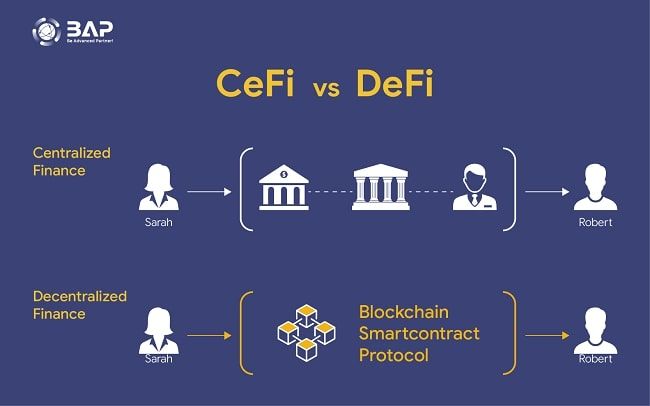
In recent years, decentralized finance (DeFi) has emerged as a game-changer in the financial industry, offering innovative solutions that challenge the traditional centralized systems. DeFi refers to a blockchain-based form of finance that does not rely on intermediaries such as banks or financial institutions to provide financial services.
What is DeFi?
DeFi is a decentralized financial ecosystem that enables users to access financial services such as lending, borrowing, trading, and insurance directly on the blockchain. By leveraging smart contracts, DeFi eliminates the need for intermediaries, making transactions faster, cheaper, and more secure.
Key Components of DeFi
There are several key components of DeFi that make it a revolutionary technology in the financial industry:
Smart Contracts
Smart contracts are self-executing contracts with terms written in code. In DeFi, smart contracts automate transactions, eliminating the need for intermediaries and reducing the risk of fraud.
Decentralized Exchanges (DEX)
Decentralized exchanges allow users to trade digital assets directly with one another, without the need for a centralized exchange. DEXs provide increased liquidity, transparency, and security compared to traditional exchanges.
Decentralized Lending and Borrowing
DeFi platforms offer decentralized lending and borrowing services, allowing users to lend their digital assets to earn interest or borrow assets by providing collateral. These services are accessible to anyone with an internet connection, regardless of their geographical location.
Decentralized Stablecoins
Stablecoins are digital assets pegged to a stable asset such as the US dollar to minimize price volatility. DeFi platforms offer decentralized stablecoins that provide stability and liquidity in the decentralized financial ecosystem.
Benefits of DeFi
DeFi offers several benefits that make it an attractive alternative to traditional financial systems:
Accessibility
DeFi services are accessible to anyone with an internet connection, enabling financial inclusion for individuals who are underserved by traditional financial institutions.
Security
By using blockchain technology and smart contracts, DeFi provides increased security and transparency, reducing the risk of fraud and unauthorized access to funds.
Cost-Effective
DeFi transactions are executed directly on the blockchain, eliminating the need for intermediaries and reducing transaction fees. This makes DeFi services more cost-effective than traditional financial services.
Challenges of DeFi
While DeFi offers many benefits, there are also some challenges that need to be addressed in order for the technology to reach its full potential:
Regulatory Uncertainty
The regulatory environment for DeFi is still evolving, with regulatory bodies around the world struggling to keep up with the rapid pace of innovation in the decentralized finance space.
Smart Contract Risks
Smart contracts are susceptible to bugs and vulnerabilities that could result in financial losses for users. Auditing and testing of smart contracts are essential to mitigate these risks.
Scalability
Scalability is a major challenge for DeFi platforms, as the current infrastructure may not be able to handle large volumes of transactions. Solutions such as layer 2 scaling and interoperability are being developed to address this issue.
Conclusion
Decentralized finance (DeFi) is revolutionizing the financial industry by providing innovative solutions that challenge the traditional centralized systems. With increased accessibility, security, and cost-effectiveness, DeFi is reshaping the way financial services are delivered and democratizing access to financial opportunities for people around the world.