
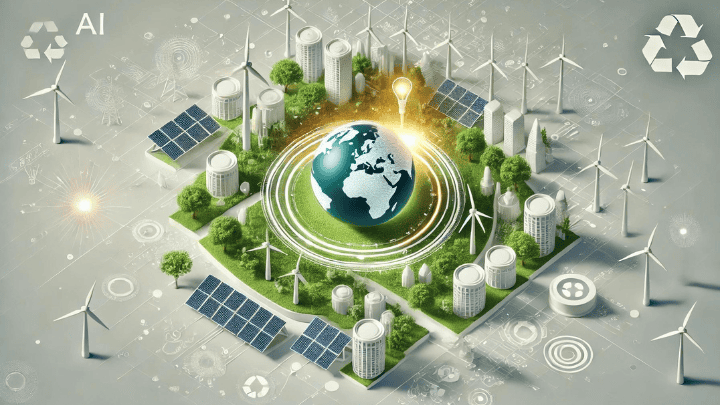
In today’s world, climate change is a pressing issue that requires urgent action. The use of Artificial Intelligence (AI) has the potential to help combat climate change by enabling better decision-making, reducing waste, and optimizing resource allocation. In this article, we will explore how AI is being used to address climate change and create a more sustainable future.
1. Climate Data Analysis
AI is being used to analyze vast amounts of climate data, enabling scientists and researchers to better understand how our planet is changing. By using machine learning algorithms, AI can identify patterns and trends in data that humans may not be able to see. This data-driven approach allows us to make more informed decisions about how to mitigate the effects of climate change.
2. Energy Optimization
AI can help optimize energy consumption by predicting energy demand and adjusting supply accordingly. Smart grids powered by AI can manage energy distribution more efficiently, reducing waste and lowering carbon emissions. AI can also help identify areas where energy efficiency can be improved, such as through the use of smart appliances and renewable energy sources.
3. Climate Modeling
AI is revolutionizing climate modeling by enabling more accurate and detailed predictions of future climate patterns. By analyzing historical data and running simulations, AI can help scientists predict how climate change will impact different regions of the world. This information can be used to develop strategies for adapting to a changing climate and mitigating its impact.
4. Sustainable Agriculture
AI is being used in agriculture to improve crop yields while reducing the environmental impact of farming. By analyzing soil conditions, weather patterns, and crop health data, AI can help farmers optimize their farming practices. This can lead to more efficient use of resources, reduced greenhouse gas emissions, and a more sustainable food supply.
5. Transportation Efficiency
AI is revolutionizing transportation by enabling more efficient routing and logistics. AI-powered algorithms can optimize traffic flow, reduce congestion, and minimize fuel consumption. Autonomous vehicles powered by AI can also help reduce emissions by driving more efficiently than human drivers. These advancements in transportation technology can help reduce the carbon footprint of our daily commutes and travel.
6. Waste Management
AI is being used to improve waste management practices by optimizing waste collection and recycling processes. By analyzing data on waste generation and disposal, AI can help municipalities develop more effective waste management strategies. This can lead to reduced landfill waste, lower greenhouse gas emissions, and a cleaner environment.
In conclusion, AI has the potential to make a significant impact in the fight against climate change. By harnessing the power of AI, we can better understand the complexities of our changing climate, optimize our use of resources, and develop sustainable solutions for a cleaner, greener future.